So an even more developed idea on how to use this mexting, Free hand, without a handset in our hands at all.
The idea of using our skin for input has been played about with before, but this idea is the use of the index finger and thumb tapping together. The handset would then receive these taps and translate as proposed and the handset would do whatever the taps are related to.. a text . . answering a call. . etc
the use of a self adhesive small metal plate to make the contact on the index finger and thumb. Which would then be blue toothed to the connected phone, this would mean that there would be no interferance between multiple phones if a group of people were using this techonology at the same time.
This would mean the handset is only on a person to receive the signals and do whatever is needed with them, and receive the messages back.
If the user was using a bluetooth headset, the messages, with asingle tap, would be played back through the bluetooth headset, thus making the whole system completely hands free.
Situations this could be taken advantage of for example while driving, The driver of a vehicle can keep their hands and concentration on the road, while using their finger and thumb, possibly around the steering wheel, tapping the messages and staying in control of the car.
A slideshow of the original concept using the handset for a taping device is to follow.
Sunday, 18 April 2010

Saturday, 17 April 2010
further work on "mexting".
So with the new form of input incorporated into a phone, how about a way to not have to look at the phone at all.
Looking at transfering the coded message into text, and then into audio. The phone could take the message once received and with a tap on the plates/mic. the message would play much like the current technology to allow text to voice on a computer.
With this technology added there would in theory be no need to look at the handset. Just have it around/on you so that you could hear you have a message, *tap* and it would play the message.
The functions of each tap could be defined for differant functions one tap to play, two to reply, three to delete etc. all at the customisation of the user.
In a sense this could also, if it took off with the general public, introduce a new breed of mobile handset, as a screen and GUI is not essential.
That may seem absurd but 50 years ago the thought of everyone carrying around a mobile phone, especially capable of what they are, was unimaginable.
Looking at transfering the coded message into text, and then into audio. The phone could take the message once received and with a tap on the plates/mic. the message would play much like the current technology to allow text to voice on a computer.
With this technology added there would in theory be no need to look at the handset. Just have it around/on you so that you could hear you have a message, *tap* and it would play the message.
The functions of each tap could be defined for differant functions one tap to play, two to reply, three to delete etc. all at the customisation of the user.
In a sense this could also, if it took off with the general public, introduce a new breed of mobile handset, as a screen and GUI is not essential.
That may seem absurd but 50 years ago the thought of everyone carrying around a mobile phone, especially capable of what they are, was unimaginable.
"Mexting"
The incorporation of morse code with text messaging.
Looking at it again, this form of input can be used from any angle, the phone itself does not have to be in a cerain direction, this could be used with the phone upside down as all that is needed are the dots and dash input.
The message when inputed vie the tapping, for example ".... . .-.. .-.. --- / - .... .. ... / .. ... / .- / - . ... -" a series of short dots and dashes in rythem will translate inside the phone to text.
this perticular sequence is a test translation "hello this is a test" although it seems longer to hit it, with the speed you could input the morse code and the fact of inputting it "blind." where the user is not looking at the phone or having to make sure its the right way up.
The advantages of this way of imput are :-
* quick input
* Ease of use
* can be used from any angle upside down, back to front etc.
* the input would be automatically translated into text
* can be used on any handset and sent to any as it will be received as text
* the text when received can be read at a quick glance and then replied without looking
* The amount of concentration required is greatly reduced over the traditional input methods.
* it is safer to use this method as it does not require you to take your attention away from your surroundings.
* this method could be used by disabled people where they are limited in movment. a single finger that moves would be enough to send a message.
* If that person was unable to speak or move they could still write messages if they they have a little bit of mobility.
Althought the advantages are many there are obviously some draw backs, the dissadvantages are as follows:
* The learning curve to morse code may take time.
* a problem with the correct pattern, incorect rythem or speed results in different outcome.
* There is the argument of why learn this instead of learnin to just use the alphanumeric keypad.
* Although it is safer as you dont need to concentrate while using it, it would probably still be illigal to use while driving.
* The user cannot see what they are texting and are relying on their memory for correct patterns to enter.
Althought there are roughly equal or arguable advantages/dissadvantages, "mexting" could be seen as a development on text messaging as with a little training into how to input morse code along with its set patterns for each letter/number. Could greatly improve the way people communicate via text message, There is also roomfor further development in this form of input which ill get to later.
Looking at it again, this form of input can be used from any angle, the phone itself does not have to be in a cerain direction, this could be used with the phone upside down as all that is needed are the dots and dash input.
The message when inputed vie the tapping, for example ".... . .-.. .-.. --- / - .... .. ... / .. ... / .- / - . ... -" a series of short dots and dashes in rythem will translate inside the phone to text.
this perticular sequence is a test translation "hello this is a test" although it seems longer to hit it, with the speed you could input the morse code and the fact of inputting it "blind." where the user is not looking at the phone or having to make sure its the right way up.
The advantages of this way of imput are :-
* quick input
* Ease of use
* can be used from any angle upside down, back to front etc.
* the input would be automatically translated into text
* can be used on any handset and sent to any as it will be received as text
* the text when received can be read at a quick glance and then replied without looking
* The amount of concentration required is greatly reduced over the traditional input methods.
* it is safer to use this method as it does not require you to take your attention away from your surroundings.
* this method could be used by disabled people where they are limited in movment. a single finger that moves would be enough to send a message.
* If that person was unable to speak or move they could still write messages if they they have a little bit of mobility.
Althought the advantages are many there are obviously some draw backs, the dissadvantages are as follows:
* The learning curve to morse code may take time.
* a problem with the correct pattern, incorect rythem or speed results in different outcome.
* There is the argument of why learn this instead of learnin to just use the alphanumeric keypad.
* Although it is safer as you dont need to concentrate while using it, it would probably still be illigal to use while driving.
* The user cannot see what they are texting and are relying on their memory for correct patterns to enter.
Althought there are roughly equal or arguable advantages/dissadvantages, "mexting" could be seen as a development on text messaging as with a little training into how to input morse code along with its set patterns for each letter/number. Could greatly improve the way people communicate via text message, There is also roomfor further development in this form of input which ill get to later.
following on.
the phones substantial amount of unused space can be taken advantage here and the backing panel could be taken off, incorporating the metal contact plates. one inside the phone and the other set into the back panel.
there is a slight gap between the two and this would be perfect to use as this would mean slight touches instead of forcful presses.

here is a rought conceptual idea using a negative of the line drawing and the incorporation of a sheet of aluminium.
Some handsets come with a metal case/fascia as standard which would be even easier to install this morse code feature.
Also most andsets are designed for in hand holding,the curves of the phones are designed to sit nicely in a hand, with easy access to the whole phone.

this using the previous picture can be shown fitting almost perfect in a hand. This would also enable the user to hold the phone from anywhere and be able to input using the metal sheet contacts. Even using an index or middle finger around the back of the phone.
there is a slight gap between the two and this would be perfect to use as this would mean slight touches instead of forcful presses.

here is a rought conceptual idea using a negative of the line drawing and the incorporation of a sheet of aluminium.
Some handsets come with a metal case/fascia as standard which would be even easier to install this morse code feature.
Also most andsets are designed for in hand holding,the curves of the phones are designed to sit nicely in a hand, with easy access to the whole phone.

this using the previous picture can be shown fitting almost perfect in a hand. This would also enable the user to hold the phone from anywhere and be able to input using the metal sheet contacts. Even using an index or middle finger around the back of the phone.
Friday, 16 April 2010
sketches of how my idea would work..
ok so looking at the way morse code is inputted, the use of metal contacts could be done on the mobile back.

you can clearly see the contacts here on a lever when pressed would make them contact and give a signal.
Here i have shown a quick line drawing on my mobile phone showing the areas of the phone applicable to this project.

namely the camera positions and the huge amount of free space on the back of the handset. aswell as mic positions which could be used for the other idea of tapping the mic for the sound input over a tapping contact.
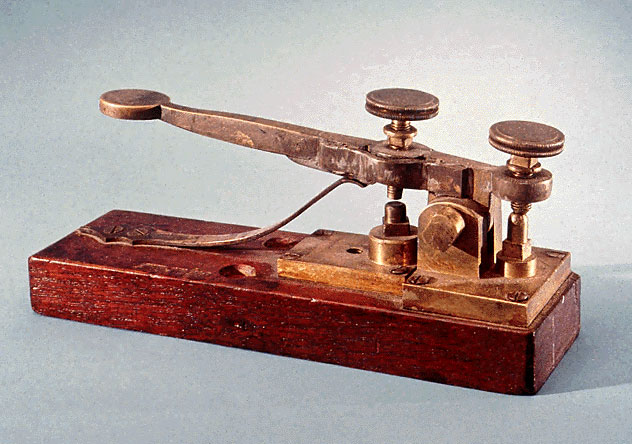
you can clearly see the contacts here on a lever when pressed would make them contact and give a signal.
Here i have shown a quick line drawing on my mobile phone showing the areas of the phone applicable to this project.

namely the camera positions and the huge amount of free space on the back of the handset. aswell as mic positions which could be used for the other idea of tapping the mic for the sound input over a tapping contact.
the merging..
how could they be merged, well the phone devises themselves are usually pretty blank at the back, ignoring the usual camera lens. There is place around the phone were a pressure plate could be incorporated, this being the input for the morse code by tapping it with their finger. The size is arguable as it will be big enough to be able to hit it without looking as this is to keep the user from having to keep looking at the phone.


this pressure plate could be used to "tap input" a text message without the need to stare at the display. where it would recognise the differance between taps and pauses, then coding them into text and with a further tap send it to whoever its for.
The input could also be the built in mic of the phone, where the taps would be "heard" by the phone and then decoded into text much like the pressure plate idea. then with variations in speed or pressure to use this morse code input to send the ready written message.
This would be advantageous while driving as a user, (although i dont encourage it,) could just tap their phone accordingly to write and send a message, or dial a number. These would keep the drivers concentration on the road ahead of them. jus by having the mobile device on their lap or in their pocket a single finger to tap the back in rythem will be sufficient.
the output of the morse code would be an already decifered message sent to the recipient. the receiving message would be in standard text to easily be read. this is not such a burden to look and read the message as it is to write one, for someone not used to it.
besides writing messages the idea of morse code tapping on the handset could be taken advantage for other options, the answer a call a single tap on the back of the handset would put them onto loud speaker, if the normal answer button is used it would stay using the internal speaker.
its the same concept as morse code and could be using differant taps on the back for differant functions, apart form answer a call you would have to hang up the call at the end right?. double tap the pressure pad and call is ended. it would be that simple.
Now the argument would be why would someone need to learn morse code to be able to do what they are able to now. Its not a necesity to know it, anyone would be able to memorize a set pattern of sequences which enable them to take advantage of the concept.
if this idea could be made to increase the speed and ease, (which is what any development leans towards.) of using a phone for texting/email/making calls etc. then it would be very advantageous to use it.
stay tuned for image ideas of this concept.


this pressure plate could be used to "tap input" a text message without the need to stare at the display. where it would recognise the differance between taps and pauses, then coding them into text and with a further tap send it to whoever its for.
The input could also be the built in mic of the phone, where the taps would be "heard" by the phone and then decoded into text much like the pressure plate idea. then with variations in speed or pressure to use this morse code input to send the ready written message.
This would be advantageous while driving as a user, (although i dont encourage it,) could just tap their phone accordingly to write and send a message, or dial a number. These would keep the drivers concentration on the road ahead of them. jus by having the mobile device on their lap or in their pocket a single finger to tap the back in rythem will be sufficient.
the output of the morse code would be an already decifered message sent to the recipient. the receiving message would be in standard text to easily be read. this is not such a burden to look and read the message as it is to write one, for someone not used to it.
besides writing messages the idea of morse code tapping on the handset could be taken advantage for other options, the answer a call a single tap on the back of the handset would put them onto loud speaker, if the normal answer button is used it would stay using the internal speaker.
its the same concept as morse code and could be using differant taps on the back for differant functions, apart form answer a call you would have to hang up the call at the end right?. double tap the pressure pad and call is ended. it would be that simple.
Now the argument would be why would someone need to learn morse code to be able to do what they are able to now. Its not a necesity to know it, anyone would be able to memorize a set pattern of sequences which enable them to take advantage of the concept.
if this idea could be made to increase the speed and ease, (which is what any development leans towards.) of using a phone for texting/email/making calls etc. then it would be very advantageous to use it.
stay tuned for image ideas of this concept.
Subscribe to:
Comments (Atom)
