So an even more developed idea on how to use this mexting, Free hand, without a handset in our hands at all.
The idea of using our skin for input has been played about with before, but this idea is the use of the index finger and thumb tapping together. The handset would then receive these taps and translate as proposed and the handset would do whatever the taps are related to.. a text . . answering a call. . etc
the use of a self adhesive small metal plate to make the contact on the index finger and thumb. Which would then be blue toothed to the connected phone, this would mean that there would be no interferance between multiple phones if a group of people were using this techonology at the same time.
This would mean the handset is only on a person to receive the signals and do whatever is needed with them, and receive the messages back.
If the user was using a bluetooth headset, the messages, with asingle tap, would be played back through the bluetooth headset, thus making the whole system completely hands free.
Situations this could be taken advantage of for example while driving, The driver of a vehicle can keep their hands and concentration on the road, while using their finger and thumb, possibly around the steering wheel, tapping the messages and staying in control of the car.
A slideshow of the original concept using the handset for a taping device is to follow.
Sunday, 18 April 2010

Saturday, 17 April 2010
further work on "mexting".
So with the new form of input incorporated into a phone, how about a way to not have to look at the phone at all.
Looking at transfering the coded message into text, and then into audio. The phone could take the message once received and with a tap on the plates/mic. the message would play much like the current technology to allow text to voice on a computer.
With this technology added there would in theory be no need to look at the handset. Just have it around/on you so that you could hear you have a message, *tap* and it would play the message.
The functions of each tap could be defined for differant functions one tap to play, two to reply, three to delete etc. all at the customisation of the user.
In a sense this could also, if it took off with the general public, introduce a new breed of mobile handset, as a screen and GUI is not essential.
That may seem absurd but 50 years ago the thought of everyone carrying around a mobile phone, especially capable of what they are, was unimaginable.
Looking at transfering the coded message into text, and then into audio. The phone could take the message once received and with a tap on the plates/mic. the message would play much like the current technology to allow text to voice on a computer.
With this technology added there would in theory be no need to look at the handset. Just have it around/on you so that you could hear you have a message, *tap* and it would play the message.
The functions of each tap could be defined for differant functions one tap to play, two to reply, three to delete etc. all at the customisation of the user.
In a sense this could also, if it took off with the general public, introduce a new breed of mobile handset, as a screen and GUI is not essential.
That may seem absurd but 50 years ago the thought of everyone carrying around a mobile phone, especially capable of what they are, was unimaginable.
"Mexting"
The incorporation of morse code with text messaging.
Looking at it again, this form of input can be used from any angle, the phone itself does not have to be in a cerain direction, this could be used with the phone upside down as all that is needed are the dots and dash input.
The message when inputed vie the tapping, for example ".... . .-.. .-.. --- / - .... .. ... / .. ... / .- / - . ... -" a series of short dots and dashes in rythem will translate inside the phone to text.
this perticular sequence is a test translation "hello this is a test" although it seems longer to hit it, with the speed you could input the morse code and the fact of inputting it "blind." where the user is not looking at the phone or having to make sure its the right way up.
The advantages of this way of imput are :-
* quick input
* Ease of use
* can be used from any angle upside down, back to front etc.
* the input would be automatically translated into text
* can be used on any handset and sent to any as it will be received as text
* the text when received can be read at a quick glance and then replied without looking
* The amount of concentration required is greatly reduced over the traditional input methods.
* it is safer to use this method as it does not require you to take your attention away from your surroundings.
* this method could be used by disabled people where they are limited in movment. a single finger that moves would be enough to send a message.
* If that person was unable to speak or move they could still write messages if they they have a little bit of mobility.
Althought the advantages are many there are obviously some draw backs, the dissadvantages are as follows:
* The learning curve to morse code may take time.
* a problem with the correct pattern, incorect rythem or speed results in different outcome.
* There is the argument of why learn this instead of learnin to just use the alphanumeric keypad.
* Although it is safer as you dont need to concentrate while using it, it would probably still be illigal to use while driving.
* The user cannot see what they are texting and are relying on their memory for correct patterns to enter.
Althought there are roughly equal or arguable advantages/dissadvantages, "mexting" could be seen as a development on text messaging as with a little training into how to input morse code along with its set patterns for each letter/number. Could greatly improve the way people communicate via text message, There is also roomfor further development in this form of input which ill get to later.
Looking at it again, this form of input can be used from any angle, the phone itself does not have to be in a cerain direction, this could be used with the phone upside down as all that is needed are the dots and dash input.
The message when inputed vie the tapping, for example ".... . .-.. .-.. --- / - .... .. ... / .. ... / .- / - . ... -" a series of short dots and dashes in rythem will translate inside the phone to text.
this perticular sequence is a test translation "hello this is a test" although it seems longer to hit it, with the speed you could input the morse code and the fact of inputting it "blind." where the user is not looking at the phone or having to make sure its the right way up.
The advantages of this way of imput are :-
* quick input
* Ease of use
* can be used from any angle upside down, back to front etc.
* the input would be automatically translated into text
* can be used on any handset and sent to any as it will be received as text
* the text when received can be read at a quick glance and then replied without looking
* The amount of concentration required is greatly reduced over the traditional input methods.
* it is safer to use this method as it does not require you to take your attention away from your surroundings.
* this method could be used by disabled people where they are limited in movment. a single finger that moves would be enough to send a message.
* If that person was unable to speak or move they could still write messages if they they have a little bit of mobility.
Althought the advantages are many there are obviously some draw backs, the dissadvantages are as follows:
* The learning curve to morse code may take time.
* a problem with the correct pattern, incorect rythem or speed results in different outcome.
* There is the argument of why learn this instead of learnin to just use the alphanumeric keypad.
* Although it is safer as you dont need to concentrate while using it, it would probably still be illigal to use while driving.
* The user cannot see what they are texting and are relying on their memory for correct patterns to enter.
Althought there are roughly equal or arguable advantages/dissadvantages, "mexting" could be seen as a development on text messaging as with a little training into how to input morse code along with its set patterns for each letter/number. Could greatly improve the way people communicate via text message, There is also roomfor further development in this form of input which ill get to later.
following on.
the phones substantial amount of unused space can be taken advantage here and the backing panel could be taken off, incorporating the metal contact plates. one inside the phone and the other set into the back panel.
there is a slight gap between the two and this would be perfect to use as this would mean slight touches instead of forcful presses.

here is a rought conceptual idea using a negative of the line drawing and the incorporation of a sheet of aluminium.
Some handsets come with a metal case/fascia as standard which would be even easier to install this morse code feature.
Also most andsets are designed for in hand holding,the curves of the phones are designed to sit nicely in a hand, with easy access to the whole phone.

this using the previous picture can be shown fitting almost perfect in a hand. This would also enable the user to hold the phone from anywhere and be able to input using the metal sheet contacts. Even using an index or middle finger around the back of the phone.
there is a slight gap between the two and this would be perfect to use as this would mean slight touches instead of forcful presses.

here is a rought conceptual idea using a negative of the line drawing and the incorporation of a sheet of aluminium.
Some handsets come with a metal case/fascia as standard which would be even easier to install this morse code feature.
Also most andsets are designed for in hand holding,the curves of the phones are designed to sit nicely in a hand, with easy access to the whole phone.

this using the previous picture can be shown fitting almost perfect in a hand. This would also enable the user to hold the phone from anywhere and be able to input using the metal sheet contacts. Even using an index or middle finger around the back of the phone.
Friday, 16 April 2010
sketches of how my idea would work..
ok so looking at the way morse code is inputted, the use of metal contacts could be done on the mobile back.

you can clearly see the contacts here on a lever when pressed would make them contact and give a signal.
Here i have shown a quick line drawing on my mobile phone showing the areas of the phone applicable to this project.

namely the camera positions and the huge amount of free space on the back of the handset. aswell as mic positions which could be used for the other idea of tapping the mic for the sound input over a tapping contact.
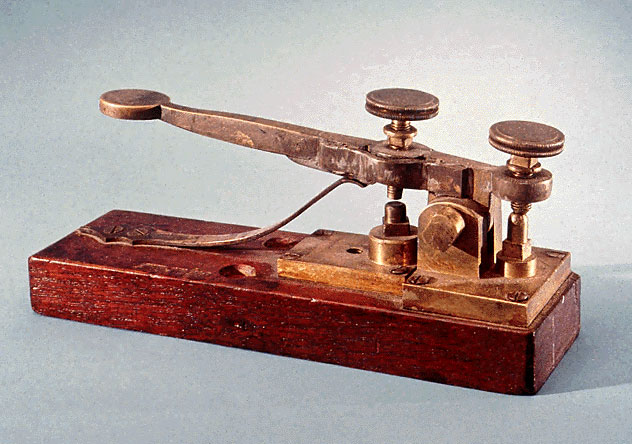
you can clearly see the contacts here on a lever when pressed would make them contact and give a signal.
Here i have shown a quick line drawing on my mobile phone showing the areas of the phone applicable to this project.

namely the camera positions and the huge amount of free space on the back of the handset. aswell as mic positions which could be used for the other idea of tapping the mic for the sound input over a tapping contact.
the merging..
how could they be merged, well the phone devises themselves are usually pretty blank at the back, ignoring the usual camera lens. There is place around the phone were a pressure plate could be incorporated, this being the input for the morse code by tapping it with their finger. The size is arguable as it will be big enough to be able to hit it without looking as this is to keep the user from having to keep looking at the phone.


this pressure plate could be used to "tap input" a text message without the need to stare at the display. where it would recognise the differance between taps and pauses, then coding them into text and with a further tap send it to whoever its for.
The input could also be the built in mic of the phone, where the taps would be "heard" by the phone and then decoded into text much like the pressure plate idea. then with variations in speed or pressure to use this morse code input to send the ready written message.
This would be advantageous while driving as a user, (although i dont encourage it,) could just tap their phone accordingly to write and send a message, or dial a number. These would keep the drivers concentration on the road ahead of them. jus by having the mobile device on their lap or in their pocket a single finger to tap the back in rythem will be sufficient.
the output of the morse code would be an already decifered message sent to the recipient. the receiving message would be in standard text to easily be read. this is not such a burden to look and read the message as it is to write one, for someone not used to it.
besides writing messages the idea of morse code tapping on the handset could be taken advantage for other options, the answer a call a single tap on the back of the handset would put them onto loud speaker, if the normal answer button is used it would stay using the internal speaker.
its the same concept as morse code and could be using differant taps on the back for differant functions, apart form answer a call you would have to hang up the call at the end right?. double tap the pressure pad and call is ended. it would be that simple.
Now the argument would be why would someone need to learn morse code to be able to do what they are able to now. Its not a necesity to know it, anyone would be able to memorize a set pattern of sequences which enable them to take advantage of the concept.
if this idea could be made to increase the speed and ease, (which is what any development leans towards.) of using a phone for texting/email/making calls etc. then it would be very advantageous to use it.
stay tuned for image ideas of this concept.


this pressure plate could be used to "tap input" a text message without the need to stare at the display. where it would recognise the differance between taps and pauses, then coding them into text and with a further tap send it to whoever its for.
The input could also be the built in mic of the phone, where the taps would be "heard" by the phone and then decoded into text much like the pressure plate idea. then with variations in speed or pressure to use this morse code input to send the ready written message.
This would be advantageous while driving as a user, (although i dont encourage it,) could just tap their phone accordingly to write and send a message, or dial a number. These would keep the drivers concentration on the road ahead of them. jus by having the mobile device on their lap or in their pocket a single finger to tap the back in rythem will be sufficient.
the output of the morse code would be an already decifered message sent to the recipient. the receiving message would be in standard text to easily be read. this is not such a burden to look and read the message as it is to write one, for someone not used to it.
besides writing messages the idea of morse code tapping on the handset could be taken advantage for other options, the answer a call a single tap on the back of the handset would put them onto loud speaker, if the normal answer button is used it would stay using the internal speaker.
its the same concept as morse code and could be using differant taps on the back for differant functions, apart form answer a call you would have to hang up the call at the end right?. double tap the pressure pad and call is ended. it would be that simple.
Now the argument would be why would someone need to learn morse code to be able to do what they are able to now. Its not a necesity to know it, anyone would be able to memorize a set pattern of sequences which enable them to take advantage of the concept.
if this idea could be made to increase the speed and ease, (which is what any development leans towards.) of using a phone for texting/email/making calls etc. then it would be very advantageous to use it.
stay tuned for image ideas of this concept.
going back to morse code..
I have breifly mentioned what morse code is and how it works earlier in my blog so i will keep the idea breif.
Morse code is the method of sending messages using a code of dots and dashes, measured as words per minute (WPM). It was originally created due to the inability to print characters, and thus a form of comunication was needed.
originally sent by having paper tape with indentations, when there was a break in the paper tape, ( the indentation) the break of the stylus make a clicking noise as it moved in and out of position. This is where the dots and dashes came from as the clicks could be directly translated. Eliminating the need for the paper tape.
when morse code was originaly transmitted via radio, the dots and dashes were sent as long and short pulses and further was found that morse code was easier to teach using audio rather than reading a page of marks. this is waht gave the "dit" and "dah" of the morse code.
morse code was the international standard for maritime communication up untill the late 90s.
and even to this day signalling for help is/can be achieved using SOS signals which is, "dot, dot, dot, dash, dash, dash, dot, dot, dot" or "· · · — — — · · ·." both of which are the one and same. this series or morse code can be achieved by flashing a light source, flicking a switch appropriately or other methods.
I also touched on the use of morse code being a method of communication for people who have a disability in communication, the ability to blink is enough to be able to use morse code.
so relating to my earlier post how could the merging the morse code input with a mobile phone device work...
Morse code is the method of sending messages using a code of dots and dashes, measured as words per minute (WPM). It was originally created due to the inability to print characters, and thus a form of comunication was needed.
originally sent by having paper tape with indentations, when there was a break in the paper tape, ( the indentation) the break of the stylus make a clicking noise as it moved in and out of position. This is where the dots and dashes came from as the clicks could be directly translated. Eliminating the need for the paper tape.
when morse code was originaly transmitted via radio, the dots and dashes were sent as long and short pulses and further was found that morse code was easier to teach using audio rather than reading a page of marks. this is waht gave the "dit" and "dah" of the morse code.
morse code was the international standard for maritime communication up untill the late 90s.
and even to this day signalling for help is/can be achieved using SOS signals which is, "dot, dot, dot, dash, dash, dash, dot, dot, dot" or "· · · — — — · · ·." both of which are the one and same. this series or morse code can be achieved by flashing a light source, flicking a switch appropriately or other methods.
I also touched on the use of morse code being a method of communication for people who have a disability in communication, the ability to blink is enough to be able to use morse code.
so relating to my earlier post how could the merging the morse code input with a mobile phone device work...
mobile phone use.
As a mobile phone, or smartphone, is the most common form of communication carried by almost everyone, be for business or pleasure they are everywhere.
With handsets becoming increasingly more gadget filled with cameras, gaming, sat nav and such. It can lead to an increase need of isolating yourself to the screen or display on the phone itself. This is whats given me the idea to expand on incorporating an older form of communication which is relativly overlooked in the current generation.
The use of voice recognition is the direction mobile phones should be approaching, where the user could interact with a device without having to lose concentration on waht they are doing. As it stands most phone devices are more developed on GUI and how a person would interact with its various menus and such.
Text messaging is a good example of breaking a users concentration, the widely popular text messaging is incorporated on every handset available but it also is subject to the design of the GUI. This does not seem that much of a burden for a user to write and send one but it can be time consuming and/or for some, short of a challenge.
The use of alphanumeric keypad is to many an unnatural way of typing, moving away from the qwerty keyboard. Although the full kayboard can be found on certain smartphones such as the blackberry range, this does not cover alot of other brands of phone. When a user first uses the phone the idea of multiple tapping of buttons to create words can seem alien. Now if that user started writing a message without looking at their phone, without practice to relate the alphabet on the corresponding keys and "feeling" the right ones to press, it is difficult if not near impossible to complete a message.
This is a danger hazard as i mentioned earlier the idea of a "mobile" is for the mobility, the use of anytime, anywhere.
What if morse code could be incorporated into these handsets ...
With handsets becoming increasingly more gadget filled with cameras, gaming, sat nav and such. It can lead to an increase need of isolating yourself to the screen or display on the phone itself. This is whats given me the idea to expand on incorporating an older form of communication which is relativly overlooked in the current generation.
The use of voice recognition is the direction mobile phones should be approaching, where the user could interact with a device without having to lose concentration on waht they are doing. As it stands most phone devices are more developed on GUI and how a person would interact with its various menus and such.
Text messaging is a good example of breaking a users concentration, the widely popular text messaging is incorporated on every handset available but it also is subject to the design of the GUI. This does not seem that much of a burden for a user to write and send one but it can be time consuming and/or for some, short of a challenge.
The use of alphanumeric keypad is to many an unnatural way of typing, moving away from the qwerty keyboard. Although the full kayboard can be found on certain smartphones such as the blackberry range, this does not cover alot of other brands of phone. When a user first uses the phone the idea of multiple tapping of buttons to create words can seem alien. Now if that user started writing a message without looking at their phone, without practice to relate the alphabet on the corresponding keys and "feeling" the right ones to press, it is difficult if not near impossible to complete a message.
This is a danger hazard as i mentioned earlier the idea of a "mobile" is for the mobility, the use of anytime, anywhere.
What if morse code could be incorporated into these handsets ...
current communication methods..
So far ive looked at some old forms of communication aswell as some more unusual ideas.
But the current generation of comunication is that of the electronic kind, e-mail, IM, text messaging, as well as phone calls.
These can all be accessed on the move with the use of many mobile phones out, commonly called smart phones due to the increase of functions, A user can send and receive a range of messages and quickly get in contact with someone via phone calls.
social networking sites have also increased the amount of communication on a daily basis. Twitter, a form of instant messenger enables a user to be "followed."
The amount of tweets produced daily are roughly 40 million, this number has sky rocketed since the twitter phenomenon took off with thegeneral public.

as you can see from the graph the amount and the short time its taken to reach them highs.
This is substantial proof that in a sense the internet (and/or smartphone use) is what makes this amount of communication posible, quickly.
this also shows me that to repurpose a method of communication is to take an old method where this massive range of users was not accesable, and combine the two (or three) to create an exciting new outcome.
But the current generation of comunication is that of the electronic kind, e-mail, IM, text messaging, as well as phone calls.
These can all be accessed on the move with the use of many mobile phones out, commonly called smart phones due to the increase of functions, A user can send and receive a range of messages and quickly get in contact with someone via phone calls.
social networking sites have also increased the amount of communication on a daily basis. Twitter, a form of instant messenger enables a user to be "followed."
The amount of tweets produced daily are roughly 40 million, this number has sky rocketed since the twitter phenomenon took off with thegeneral public.
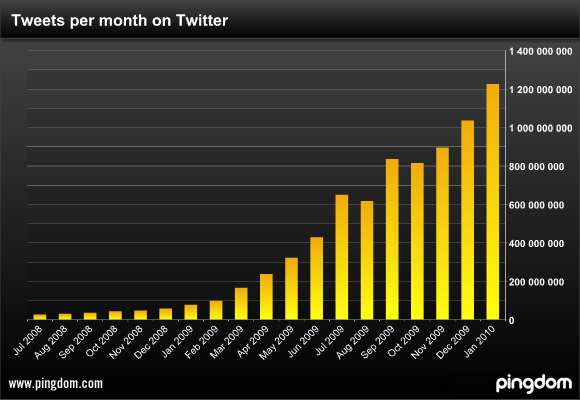
as you can see from the graph the amount and the short time its taken to reach them highs.
This is substantial proof that in a sense the internet (and/or smartphone use) is what makes this amount of communication posible, quickly.
this also shows me that to repurpose a method of communication is to take an old method where this massive range of users was not accesable, and combine the two (or three) to create an exciting new outcome.
related to smoke signals..
going back to the mention of smoke signals, "skywriting," as its known, is a form of smoke signal where a plane would use a pressurized container of oil which is injected through the exhaust leaving a white trail.
In turn the plane would then fly accordingly to spell out letters numbers and symbols inthe sky. the message evaporates rather quickly once its displayed so the skywriting technique is normally for small messages, or designs.
a further developed idea of this could be to use a form of glowing oil, as found in "glow sticks." The combination of the isolated substances found within them creates a chemical light.
Using this a mix of this oil and the pressurized canister oil to have an aircraft produce glowing messages in the sky.. with a possibility of having the messages only visable though a certain display/lense/glasses etc..

this could result in night time "stealth" messages as only the receiving participants would be able to see it using their viewer whichever that may be.
In turn the plane would then fly accordingly to spell out letters numbers and symbols inthe sky. the message evaporates rather quickly once its displayed so the skywriting technique is normally for small messages, or designs.
a further developed idea of this could be to use a form of glowing oil, as found in "glow sticks." The combination of the isolated substances found within them creates a chemical light.
Using this a mix of this oil and the pressurized canister oil to have an aircraft produce glowing messages in the sky.. with a possibility of having the messages only visable though a certain display/lense/glasses etc..

this could result in night time "stealth" messages as only the receiving participants would be able to see it using their viewer whichever that may be.
I know what your thinking..
ok, body language in itself is a form of communication and if recognised well enough could potentially result in a person being "read."
and example of this is popular card game poker, within this game of wit players learn to be aware of their surrounding opponents actions. A twitch or eyebrow raise can all relate to a bluff or a genuine reaction.
The idea behind reading body language has been included in science since the 1950s and has since been included in the military and law enforcment as it has prooved to be right and can possibly reveal a persons lies from the truth
and example of this is popular card game poker, within this game of wit players learn to be aware of their surrounding opponents actions. A twitch or eyebrow raise can all relate to a bluff or a genuine reaction.
The idea behind reading body language has been included in science since the 1950s and has since been included in the military and law enforcment as it has prooved to be right and can possibly reveal a persons lies from the truth
Monday, 22 February 2010
Eye tracking.
There is a percentage of the world that are limited in how they can communicate where it be paralysis or other disability, Their eyes are their best chance of communication.
There is eye tracing software available where it could record where the person looks and output it.
Text to speech technology can also be included in this so that the user can spell out words with their eye sight and then speak it out to the people around them.
this will break the barrier between communication and current ways such as sign language.
A basic idea of this would be :
A screen
Camera
Speaker
the screen could be set up to include the most commonly used words such as yes or no and the alphabet to enable full dictionairy use.
This is definetly something i want to look into and possible develop for this project.
There is eye tracing software available where it could record where the person looks and output it.
Text to speech technology can also be included in this so that the user can spell out words with their eye sight and then speak it out to the people around them.
this will break the barrier between communication and current ways such as sign language.
A basic idea of this would be :
A screen
Camera
Speaker
the screen could be set up to include the most commonly used words such as yes or no and the alphabet to enable full dictionairy use.
This is definetly something i want to look into and possible develop for this project.
combining communication
Communication has developed in itself ever since the day of man, where technology has been pushing the development, in this current generation, the digital generation, communication is becoming more and more frequent virtually. Where social networking and email is helping long distance communication easy and quick.
This is also a downfall as real life communication is slowly decreased by this now "online" generation.
The development of social networking could be seen in the future as possible "avatars," these are already currently available on game consoles such as the "Wii-me" and the xbox equivlent avatar.
The customisation of these can be created to look like the corresponding user.
Possible The online universe which is currently held within a screen, can be brought back into reality and these avatars could infact be self developing and self learning, but based from the original source, for example:
Google, this is currently the number 1 accessed site worldwide, if the internet were made into a virtual reality, a user could talk to the "google avatar" and using speech recognition it could react to them.
this would ultimatly take the internet away from a screen, food for thought.
This is also a downfall as real life communication is slowly decreased by this now "online" generation.
The development of social networking could be seen in the future as possible "avatars," these are already currently available on game consoles such as the "Wii-me" and the xbox equivlent avatar.
The customisation of these can be created to look like the corresponding user.
Possible The online universe which is currently held within a screen, can be brought back into reality and these avatars could infact be self developing and self learning, but based from the original source, for example:
Google, this is currently the number 1 accessed site worldwide, if the internet were made into a virtual reality, a user could talk to the "google avatar" and using speech recognition it could react to them.
this would ultimatly take the internet away from a screen, food for thought.
Communication in babies and toddlers.
Babies begin to express likes and dislikes with body language, nodding in agreement or wrinkling their nose with displeasure. They'll also begin to communicate what they want by pointing, crawling, and gesturing.
You'll know that your baby understands what you say when you ask: "Where's Daddy?" and your little one looks his way, or you say: "Go find the blue ball," and he or she crawls right to it. Your baby should respond well to his or her own name, and should look up (and at least pause) when you firmly say, "NO!"
(http://kidshealth.org/parent/growth/communication/c812m.html)
Babies develop their communication skills from early ages by mimicing their surroundings or by using facial expressions, whether learnt or natural, they are founded by reactions and/or outcomes.
Sign language can be used to help them communicate from very early ages and this will help them learn association quicker.
Many of the toys amde for babies are things to help them learn, such as toys tht make noises from certain buttons, a lion = roar etc.
You'll know that your baby understands what you say when you ask: "Where's Daddy?" and your little one looks his way, or you say: "Go find the blue ball," and he or she crawls right to it. Your baby should respond well to his or her own name, and should look up (and at least pause) when you firmly say, "NO!"
(http://kidshealth.org/parent/growth/communication/c812m.html)
Babies develop their communication skills from early ages by mimicing their surroundings or by using facial expressions, whether learnt or natural, they are founded by reactions and/or outcomes.
Sign language can be used to help them communicate from very early ages and this will help them learn association quicker.
Many of the toys amde for babies are things to help them learn, such as toys tht make noises from certain buttons, a lion = roar etc.
Morse code

Morse code is a type of character encoding that transmits telegraphic information using rhythm. Morse code uses a standardized sequence of short and long elements to represent the letters, numerals, punctuation and special characters of a given message. The short and long elements can be formed by sounds, marks, or pulses, in on off keying and are commonly known as "dots" and "dashes" or "dits" and "dahs". The speed of Morse code is measured in words per minute (WPM) or characters per minute.
Monday, 15 February 2010
Smoke signals
Smoke signals are one of the oldest forms of communication.
Using puffs of smoke people could communicate from tower to tower up to 300 miles in just a few hours.
Although there were downsides to this such as weather conditions and lighting.
In a sense a developed format of smoke signals can be seen in a distress flare, this flare is used mainly at sea to alert someone. The flare itself shoots up and lights up the sky to show someones position.
following on from this a new idea could be using High intensity discharge lights, having some form of activator to start them and have them pulse or flash, The light from these Xenon bulbs is immensely bright and could be seen from a high distance.
Using puffs of smoke people could communicate from tower to tower up to 300 miles in just a few hours.
Although there were downsides to this such as weather conditions and lighting.
In a sense a developed format of smoke signals can be seen in a distress flare, this flare is used mainly at sea to alert someone. The flare itself shoots up and lights up the sky to show someones position.
following on from this a new idea could be using High intensity discharge lights, having some form of activator to start them and have them pulse or flash, The light from these Xenon bulbs is immensely bright and could be seen from a high distance.
Monday, 8 February 2010
Brief
You are required to research and examine outmoded means of communication and re-purpose the most appropriate for the new media digital age. Your challenge firstly to understand how the chosen method affected change in its context of its time and secondly, to propose and construct a contemporary response.
Keep this blog of my work and draw inspiration from my research.
Looking as, for example, smoke signals, drums, semaphore and heliographs
Keep this blog of my work and draw inspiration from my research.
Looking as, for example, smoke signals, drums, semaphore and heliographs
Subscribe to:
Comments (Atom)
